
Ever grabbed a tape measure and stared at “34 inches” like it owes you money?
You are not alone.
Most people cannot picture 34 inches in their head without something real to compare it to.
Here is the good news.
34 inches in cm is exactly 86.36 cm, and 34 inches in feet is 2 feet 10 inches.
But numbers alone do not help much when you are standing in a store or planning your nursery.
That is exactly why this guide exists.
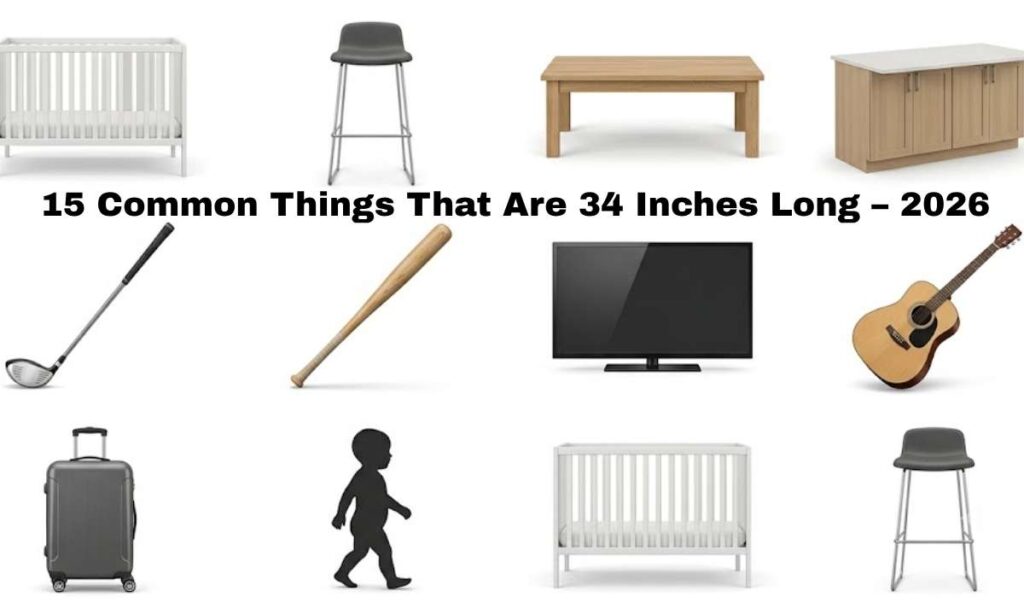
Below you will find 11 real, everyday objects that measure 34 inches long, plus body tricks to estimate it without any tools.
By the end, visualizing 34 inches will feel as natural as knowing how tall your coffee table is.
Quick Conversion: What Is 34 Inches?
Before diving into common objects measuring 34 inches, let us lock in the numbers fast.
| Unit | Value |
| Feet | 2 feet 10 inches |
| Centimeters | 86.36 cm |
| Millimeters | 863.6 mm |
| Meters | 0.8636 m |
Save this table.
You will thank yourself later when someone asks you to measure something and your tape measure has mysteriously vanished.
How to Visualize 34 Inches Using Your Body
No ruler? No problem.
Your body is basically a free measurement tool you carry everywhere.
These four methods work surprisingly well for measuring without a tape measure.
Forearm Stacking

Your forearm, from elbow to fingertips, measures roughly 11 to 12 inches for most adults.
Stack three forearms end to end and you land right around 34 inches.
This is one of the fastest body measurement methods you can use on the spot.
Try it next time you are furniture shopping.
Hold your forearm against a shelf, mark the end mentally, repeat three times.
It is not lab-accurate but it gets you close enough to make a smart call.
Hand Spans

Spread your fingers wide and measure from your pinky tip to your thumb tip.
Most adults get about 7 to 8 inches per hand span.
Four and a half hand spans put you right at 34 inches.
This method works great when you are lying on a rug or checking if a suitcase fits.
It feels a bit silly at first but it genuinely works.
Once you practice it twice, it becomes second nature.
Torso Diagonal

Here is a surprisingly accurate one that not many people talk about.
Measure diagonally from one shoulder bone across to the opposite hip bone.
For most adults that torso diagonal length comes out to around 34 inches.
This trick is handy when you need a rough measurement and both hands are full.
It also works well when explaining furniture height to someone over the phone.
“About as long as your shoulder to opposite hip” lands instantly.
Leg and Hand Method

Measure from your knee down to your ankle.
For most people that knee to ankle measurement sits between 24 and 26 inches.
Add one hand length of about 7 to 8 inches and you have 34 inches.
This is a solid option when you are seated and eyeballing something on the floor.
Try it with suitcases or floor-level furniture to check rough sizing.
It sounds complicated but once you try it once you will never forget it.
Objects Around the World That Are 34 Inches Long
Real life size references show up in cultures all around the globe at this exact measurement.
A Kendo shinai practice sword used in beginner training sessions in Japan measures around 34 inches for younger practitioners learning the basics of the sport.
In India, decorative temple brass oil lamps placed at entrances during festivals often stand close to 34 inches tall from base to flame cup.
In Canada, Indigenous talking sticks used in First Nations community councils typically measure 33 to 34 inches, sized to sit comfortably in one hand during a seated gathering.
In France, traditional wooden bread boards used in open-air markets to carry baguettes have historically measured around 34 inches end to end.
These are not random facts. They show that 34 inches is a naturally comfortable human-scale length that shows up across very different cultures and uses.
Home and Furniture Items That Are 34 Inches Long
Walk through any home and you will bump into 34 inch household measurements more often than you expect.
Furniture dimensions in this range are common because 34 inches sits at a comfortable human interaction height.
Let us go room by room.
Standard Baby Crib Rail Height
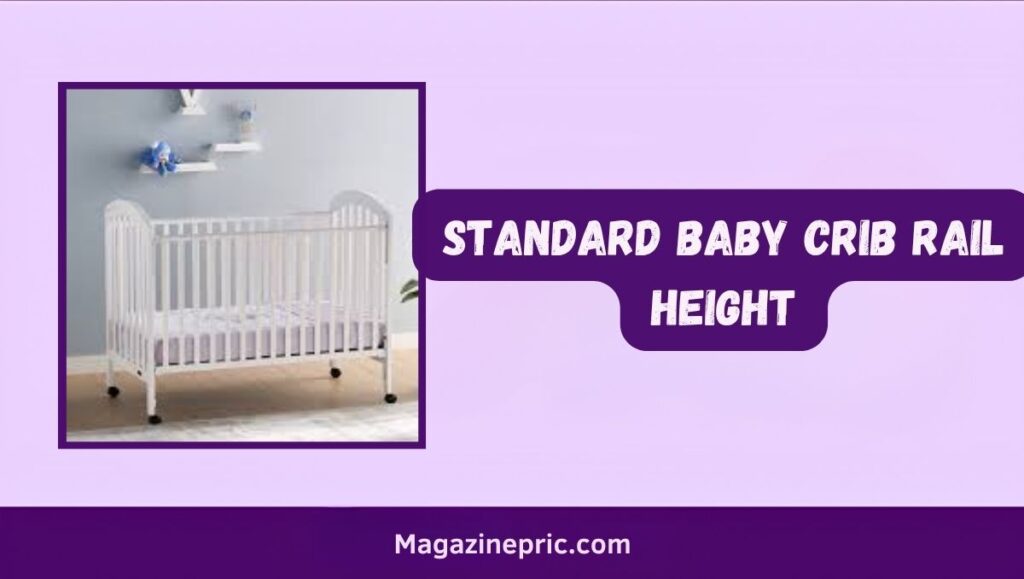
Most baby cribs on the market today measure very close to 34 inches from the floor to the top of the side rail.
This is not an accident. Crib safety standards set by the Consumer Product Safety Commission guide manufacturers toward this height to keep babies safely contained.
When you are shopping for nursery furniture measurements, 34 inches is the number to keep in mind for rail height.
If you have ever stood next to a crib and rested your elbow on the top rail without bending, you have felt exactly what 34 inches feels like.
That comfortable forearm rest height is the whole point of the design.
It keeps parents from straining their backs during late-night checks.
Counter-Height Bar Stool

A counter height bar stool measured from the floor to the top of the backrest typically lands between 33 and 35 inches.
These stools are designed specifically to pair with standard 36-inch kitchen countertops, which means the backrest sits just slightly below counter level.
This is one of the most common household size references for 34 inches that people encounter every single day.
If you are picking stools for a kitchen island, 34 inches is your sweet spot.
It keeps the seat height comfortable and the back supports exactly where your spine needs it.
Kitchen island dimensions and stool height go hand in hand, and 34 inches is the number that makes the whole setup feel right.
Read More: 18 Common Things That Are 26 Inches Long – 2026
Office Desk Height
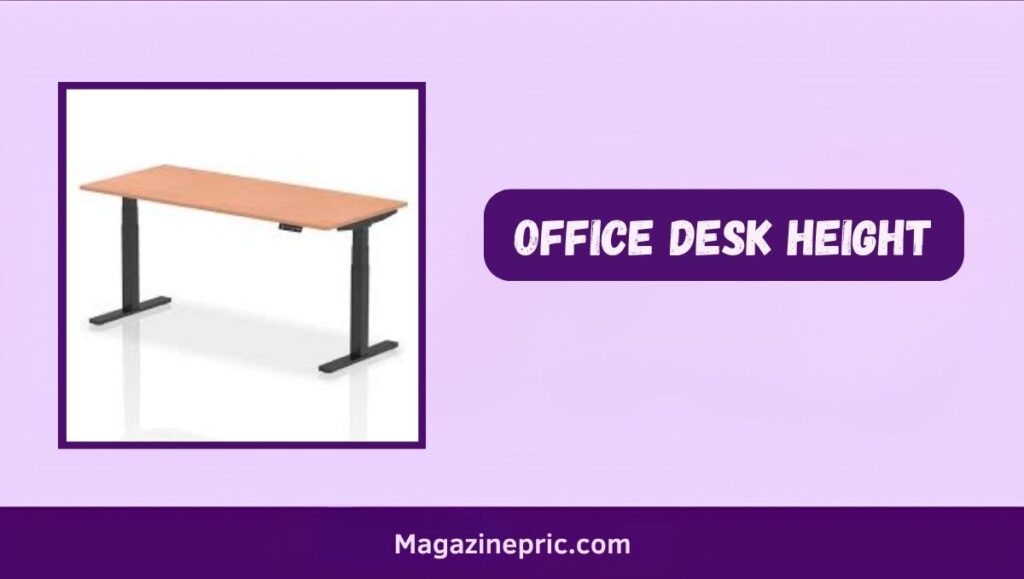
Standard office desk depth often stretches to around 34 inches from front to back.
This gives enough room for a monitor, keyboard, mouse, and a notebook without things feeling cramped.
Workspace dimensions around 34 inches of depth are considered the gold standard for ergonomic desk setups.
A shallower desk at 24 inches works in a pinch, but you will notice the difference quickly.
With 34 inches of depth you can push the monitor back far enough to sit at the right eye distance.
Your neck and eyes will thank you after a long work day.
Kitchen Countertop Depth Extended

Standard kitchen counters run about 25 inches deep, but extended countertop depth on kitchen islands or breakfast bars often stretches to 34 inches.
This extra space is what makes an island feel genuinely usable for food prep rather than just decorative.
A countertop sizing guide for islands almost always recommends 34 inches as the minimum comfortable working depth.
If you are planning a kitchen renovation, this measurement matters more than most people realize.
That extra 9 inches over a standard counter turns into real usable workspace when you are chopping vegetables or setting out appetizers.
It is the difference between a functional island and one that just looks good in photos.
Sports and Recreation Equipment Measuring 34 Inches
Athletes and coaches deal with sports equipment sizing constantly, and 34 inches shows up as a key number in multiple youth sports.
Getting the right length for young players is not just about comfort, it directly affects technique and performance.
Here is where you will find it.
Junior Golf Club

Junior golf club length for players between 4 feet 4 inches and 4 feet 9 inches tall typically sits right at 34 inches.
Youth golf clubs at this length allow young players to maintain proper posture and swing mechanics without overreaching or hunching.
Adult clubs run from 37 to 45 inches, so 34 inches represents a meaningful size-down designed for smaller bodies.
If you are buying a first set of clubs for a kid, check the shaft length before anything else.
A club that is even two inches too long throws off the entire swing and makes learning much harder.
At 34 inches, most kids in that height range can grip the club naturally and develop good habits from day one.
Baseball Bat Youth Size

Youth baseball bat size for players in the 12 to 14 age range commonly lands at 34 inches in baseball bat length.
At this length the bat gives enough reach across the plate while still being light and manageable for a growing player.
Sports equipment sizing for bats follows strict league guidelines, and 34 inches sits at the top of the youth range.
A bat that is too long slows the swing and causes bad habits like dropping the back shoulder.
A bat at the right length, in this case 34 inches for older youth players, keeps the mechanics clean.
Coaches will tell you bat length matters as much as bat weight when developing young hitters.
Technology and Electronics at 34 Inches

Television screen measurements are always given diagonally, which trips up a lot of buyers.
When a TV is listed as 34 inches, that means 34 inches from one corner of the screen to the opposite corner.
The actual 34 inch TV dimensions work out to roughly 30 inches wide and 17 inches tall for a standard widescreen model.
Medium-Sized Flat-Screen TV Diagonal

A flat screen TV diagonal size of 34 inches is a niche but genuinely useful size for specific situations.
It works well as a secondary monitor in a bedroom, a screen above a kitchen counter, or a display in a small home office where a 55-inch TV would feel overwhelming.
Understanding television screen measurements in real-world terms helps you avoid buying something that looks wrong in the space.
Before buying any screen, measure the wall or surface where it will sit.
A 34-inch TV needs about 30 inches of horizontal wall space just for the screen itself, plus some breathing room on each side.
Knowing the real life size references before you buy saves a lot of awkward returns.
Musical Instruments That Are 34 Inches Long

Instrument sizing matters more than most beginners realize.
The wrong size guitar makes learning harder, less comfortable, and honestly less fun.
This is where guitar sizing for children becomes a real conversation.
3/4 Size Acoustic Guitar

A 3/4 size guitar measures approximately 34 inches from the tuning pegs at the headstock down to the bottom of the body.
This acoustic guitar size is designed for children roughly between ages 8 and 11, or for smaller adults who find full-size guitars awkward.
At 34 inches it maintains proper string tension and produces real musical tone, not just a toy sound.
If a child starts on a guitar that is too big, they strain to reach the frets and lose motivation fast.
A 34-inch 3/4 size guitar puts the frets and body in exactly the right place for small hands.
It is one of the smartest investments you can make for a young musician just starting out.
Travel and Luggage Items Measuring 34 Inches
Checked luggage dimensions are something most travelers only think about at the airport, which is the worst possible time to think about them.
Airlines measure bags by total linear inches, which is height plus width plus depth combined.
But the height of a large rolling suitcase alone often sits right around 34 inches.
Large Rolling Suitcase

A large checked bag typically measures 30 to 34 inches tall when standing upright, wheels included.
At 34 inches that suitcase comes up roughly to your hip, which gives you a good mental picture next time you are shopping.
Travel luggage size at this height usually falls into the checked-only category, so always verify airline limits before you pack.
If you are shopping for luggage online, the listed height almost always includes the wheels and handle base.
That can add 2 to 3 inches over the actual bag body.
Knowing that 34 inches puts you at the large end of most checked bag ranges helps you buy smarter.
Measurement Tools and Standards at 34 Inches
Standard Yardstick Minus 2 Inches
A standard yardstick measurement is exactly 36 inches long.
Subtract 2 inches from a yardstick and you have your 34 inches right there.
This is one of the simplest ruler length comparisons you can make with a tool most homes already have.
If you do not have a yardstick, line up three standard 12-inch school rulers and remove 2 inches from one end.
Same result. This method is great for double-checking furniture measurements or cutting fabric.
It is basic but reliable, and reliability is what good measurement tools are all about.
Children and Growth Measurements
Average 2-Year-Old Child Height
According to pediatric growth charts from the American Academy of Pediatrics, the average 2 year old height lands right around 34 inches.
This milestone on the toddler height chart is tracked closely by pediatricians as part of healthy development monitoring.
It means if you have ever picked up a 2-year-old, you have literally held 34 inches in your arms.
This is one of the most relatable real life size references for this measurement because almost every parent or aunt or uncle has experienced it.
That moment where a toddler stands next to the couch and comes up to the seat cushion? That is roughly 34 inches at work.
Toddler height compared to 34 inches is a natural mental anchor that sticks with you.
Why Knowing 34 Inches Matters in Real Life
Practical measurement examples like these save you real money and real frustration.
Buying furniture that does not fit, stools that are the wrong height, or a guitar that kills a kid’s motivation to learn are all problems that a solid length reference fixes in seconds.
Dimension awareness is not a skill only builders and designers need, it is genuinely useful for everyone.
Keep this guide bookmarked the next time you are shopping, renovating, or just trying to explain a size to someone over text.
Understanding the size of 34 inches in daily life becomes effortless once you have a few real anchors locked in your head.
Share it with someone who always second-guesses their measurements and save them the trip back to the store.
Conclusion
So there you have it. 34 inches shows up in baby cribs, bar stools, baseball bats, guitars, suitcases, and even your own toddler’s height. This visual guide to 34 inch measurements covers everything from body tricks to global objects so you always have a mental reference ready. Next time someone asks you how big is 34 inches compared to common items, you will have 11 solid answers without even blinking.
Got a favorite object that you use as your personal length reference? Drop it in the comments below. Genuinely curious what people use as their go-to measurement anchor in real life.